AI Code Leaderboard

AI Code Leaderboard — independent reviews, comparisons, pricing and step-by-step guides on Aizhi.

  • Structural synthesis of programs

    Structural synthesis of programs

    Structural synthesis of programs (SSP) is a special form of (automatic) program synthesis that is based on propositional calculus. More precisely, it uses intuitionistic logic for describing the structure of a program in such a detail that the program can be automatically composed from pieces like subroutines or even computer commands. It is assumed that these pieces have been implemented correctly, hence no correctness verification of these pieces is needed. SSP is well suited for automatic composition of services for service-oriented architectures and for synthesis of large simulation programs. == History == Automatic program synthesis began in the artificial intelligence field, with software intended for automatic problem solving. The first program synthesizer was developed by Cordell Green in 1969. At about the same time, mathematicians including R. Constable, Z. Manna, and R. Waldinger explained the possible use of formal logic for automatic program synthesis. Practically applicable program synthesizers appeared considerably later. The idea of structural synthesis of programs was introduced at a conference on algorithms in modern mathematics and computer science organized by Andrey Ershov and Donald Knuth in 1979. The idea originated from G. Pólya’s well-known book on problem solving. The method for devising a plan for solving a problem in SSP was presented as a formal system. The inference rules of the system were restructured and justified in logic by G. Mints and E. Tyugu in 1982. A programming tool PRIZ that uses SSP was developed in the 1980s. A recent Integrated development environment that supports SSP is CoCoViLa — a model-based software development platform for implementing domain specific languages and developing large Java programs. == The logic of SSP == Structural synthesis of programs is a method for composing programs from already implemented components (e.g. from computer commands or software object methods) that can be considered as functions. A specification for synthesis is given in intuitionistic propositional logic by writing axioms about the applicability of functions. An axiom about the applicability of a function f is a logical implication X1 ∧ X2 ∧ ... ∧ Xm → Y1 ∧ Y2 ... Yn, where X1, X2, ... Xm are preconditions and Y1, Y2, ... Yn are postconditions of the application of the function f. In intuitionistic logic, the function f is called a realization of this formula. A precondition can be a proposition stating that input data exists, e.g. Xi may have the meaning “variable xi has received a value”, but it may denote also some other condition, e.g. that resources needed for using the function f are available, etc. A precondition may also be an implication of the same form as the axiom given above; then it is called a subtask. A subtask denotes a function that must be available as an input when the function f is applied. This function itself must be synthesized in the process of SSP. In this case, realization of the axiom is a higher order function, i.e., a function that uses another function as an input. For instance, the formula (state → nextState) ∧ initialState → result can specify a higher order function with two inputs and an output result. The first input is a function that has to be synthesized for computing nextState from state, and the second input is initialState. Higher order functions give generality to the SSP – any control structure needed in a synthesized program can be preprogrammed and used then automatically with a respective specification. In particular, the last axiom presented here is a specification of a complex program – a simulation engine for simulating dynamic systems on models where nextState can be computed from state of the system.

    Read more →
  • Latent and observable variables

    Latent and observable variables

    In statistics, latent variables (from Latin: present participle of lateo 'lie hidden') are variables that can only be inferred indirectly through a mathematical model from other observable variables that can be directly observed or measured. Such latent variable models are used in many disciplines, including engineering, medicine, ecology, physics, machine learning/artificial intelligence, natural language processing, bioinformatics, chemometrics, demography, economics, management, political science, psychology and the social sciences. Latent variables may correspond to aspects of physical reality. These could in principle be measured, but may not be for practical reasons. Among the earliest expressions of this idea is Francis Bacon's polemic the Novum Organum, itself a challenge to the more traditional logic expressed in Aristotle's Organon: But the latent process of which we speak, is far from being obvious to men’s minds, beset as they now are. For we mean not the measures, symptoms, or degrees of any process which can be exhibited in the bodies themselves, but simply a continued process, which, for the most part, escapes the observation of the senses. In this situation, the term hidden variables is commonly used, reflecting the fact that the variables are meaningful, but not observable. Other latent variables correspond to abstract concepts, like categories, behavioral or mental states, or data structures. The terms hypothetical variables or hypothetical constructs may be used in these situations. The use of latent variables can serve to reduce the dimensionality of data. Many observable variables can be aggregated in a model to represent an underlying concept, making it easier to understand the data. In this sense, they serve a function similar to that of scientific theories. At the same time, latent variables link observable "sub-symbolic" data in the real world to symbolic data in the modeled world. == Examples == === Psychology === Latent variables, as created by factor analytic methods, generally represent "shared" variance, or the degree to which variables "move" together. Variables that have no correlation cannot result in a latent construct based on the common factor model. The "Big Five personality traits" have been inferred using factor analysis. extraversion spatial ability wisdom: “Two of the more predominant means of assessing wisdom include wisdom-related performance and latent variable measures.” Spearman's g, or the general intelligence factor in psychometrics === Economics === Examples of latent variables from the field of economics include quality of life, business confidence, morale, happiness and conservatism: these are all variables which cannot be measured directly. However, by linking these latent variables to other, observable variables, the values of the latent variables can be inferred from measurements of the observable variables. Quality of life is a latent variable which cannot be measured directly, so observable variables are used to infer quality of life. Observable variables to measure quality of life include wealth, employment, environment, physical and mental health, education, recreation and leisure time, and social belonging. === Medicine === Latent-variable methodology is used in many branches of medicine. A class of problems that naturally lend themselves to latent variables approaches are longitudinal studies where the time scale (e.g. age of participant or time since study baseline) is not synchronized with the trait being studied. For such studies, an unobserved time scale that is synchronized with the trait being studied can be modeled as a transformation of the observed time scale using latent variables. Examples of this include disease progression modeling and modeling of growth (see box). == Inferring latent variables == There exists a range of different model classes and methodology that make use of latent variables and allow inference in the presence of latent variables. Models include: linear mixed-effects models and nonlinear mixed-effects models Hidden Markov models Factor analysis Item response theory Analysis and inference methods include: Principal component analysis Instrumented principal component analysis Partial least squares regression Latent semantic analysis and probabilistic latent semantic analysis EM algorithms Metropolis–Hastings algorithm === Bayesian algorithms and methods === Bayesian statistics is often used for inferring latent variables. Latent Dirichlet allocation The Chinese restaurant process is often used to provide a prior distribution over assignments of objects to latent categories. The Indian buffet process is often used to provide a prior distribution over assignments of latent binary features to objects.

    Read more →
  • Constellation model

    Constellation model

    The constellation model is a probabilistic, generative model for category-level object recognition in computer vision. Like other part-based models, the constellation model attempts to represent an object class by a set of N parts under mutual geometric constraints. Because it considers the geometric relationship between different parts, the constellation model differs significantly from appearance-only, or "bag-of-words" representation models, which explicitly disregard the location of image features. The problem of defining a generative model for object recognition is difficult. The task becomes significantly complicated by factors such as background clutter, occlusion, and variations in viewpoint, illumination, and scale. Ideally, we would like the particular representation we choose to be robust to as many of these factors as possible. In category-level recognition, the problem is even more challenging because of the fundamental problem of intra-class variation. Even if two objects belong to the same visual category, their appearances may be significantly different. However, for structured objects such as cars, bicycles, and people, separate instances of objects from the same category are subject to similar geometric constraints. For this reason, particular parts of an object such as the headlights or tires of a car still have consistent appearances and relative positions. The Constellation Model takes advantage of this fact by explicitly modeling the relative location, relative scale, and appearance of these parts for a particular object category. Model parameters are estimated using an unsupervised learning algorithm, meaning that the visual concept of an object class can be extracted from an unlabeled set of training images, even if that set contains "junk" images or instances of objects from multiple categories. It can also account for the absence of model parts due to appearance variability, occlusion, clutter, or detector error. == History == The idea for a "parts and structure" model was originally introduced by Fischler and Elschlager in 1973. This model has since been built upon and extended in many directions. The Constellation Model, as introduced by Dr. Perona and his colleagues, was a probabilistic adaptation of this approach. In the late '90s, Burl et al. revisited the Fischler and Elschlager model for the purpose of face recognition. In their work, Burl et al. used manual selection of constellation parts in training images to construct a statistical model for a set of detectors and the relative locations at which they should be applied. In 2000, Weber et al. made the significant step of training the model using a more unsupervised learning process, which precluded the necessity for tedious hand-labeling of parts. Their algorithm was particularly remarkable because it performed well even on cluttered and occluded image data. Fergus et al. then improved upon this model by making the learning step fully unsupervised, having both shape and appearance learned simultaneously, and accounting explicitly for the relative scale of parts. == The method of Weber and Welling et al. == In the first step, a standard interest point detection method, such as Harris corner detection, is used to generate interest points. Image features generated from the vicinity of these points are then clustered using k-means or another appropriate algorithm. In this process of vector quantization, one can think of the centroids of these clusters as being representative of the appearance of distinctive object parts. Appropriate feature detectors are then trained using these clusters, which can be used to obtain a set of candidate parts from images. As a result of this process, each image can now be represented as a set of parts. Each part has a type, corresponding to one of the aforementioned appearance clusters, as well as a location in the image space. === Basic generative model === Weber & Welling here introduce the concept of foreground and background. Foreground parts correspond to an instance of a target object class, whereas background parts correspond to background clutter or false detections. Let T be the number of different types of parts. The positions of all parts extracted from an image can then be represented in the following "matrix," X o = ( x 11 , x 12 , ⋯ , x 1 N 1 x 21 , x 22 , ⋯ , x 2 N 2 ⋮ x T 1 , x T 2 , ⋯ , x T N T ) {\displaystyle X^{o}={\begin{pmatrix}x_{11},x_{12},{\cdots },x_{1N_{1}}\\x_{21},x_{22},{\cdots },x_{2N_{2}}\\\vdots \\x_{T1},x_{T2},{\cdots },x_{TN_{T}}\end{pmatrix}}} where N i {\displaystyle N_{i}\,} represents the number of parts of type i ∈ { 1 , … , T } {\displaystyle i\in \{1,\dots ,T\}} observed in the image. The superscript o indicates that these positions are observable, as opposed to missing. The positions of unobserved object parts can be represented by the vector x m {\displaystyle x^{m}\,} . Suppose that the object will be composed of F {\displaystyle F\,} distinct foreground parts. For notational simplicity, we assume here that F = T {\displaystyle F=T\,} , though the model can be generalized to F > T {\displaystyle F>T\,} . A hypothesis h {\displaystyle h\,} is then defined as a set of indices, with h i = j {\displaystyle h_{i}=j\,} , indicating that point x i j {\displaystyle x_{ij}\,} is a foreground point in X o {\displaystyle X^{o}\,} . The generative probabilistic model is defined through the joint probability density p ( X o , x m , h ) {\displaystyle p(X^{o},x^{m},h)\,} . === Model details === The rest of this section summarizes the details of Weber & Welling's model for a single component model. The formulas for multiple component models are extensions of those described here. To parametrize the joint probability density, Weber & Welling introduce the auxiliary variables b {\displaystyle b\,} and n {\displaystyle n\,} , where b {\displaystyle b\,} is a binary vector encoding the presence/absence of parts in detection ( b i = 1 {\displaystyle b_{i}=1\,} if h i > 0 {\displaystyle h_{i}>0\,} , otherwise b i = 0 {\displaystyle b_{i}=0\,} ), and n {\displaystyle n\,} is a vector where n i {\displaystyle n_{i}\,} denotes the number of background candidates included in the i t h {\displaystyle i^{th}} row of X o {\displaystyle X^{o}\,} . Since b {\displaystyle b\,} and n {\displaystyle n\,} are completely determined by h {\displaystyle h\,} and the size of X o {\displaystyle X^{o}\,} , we have p ( X o , x m , h ) = p ( X o , x m , h , n , b ) {\displaystyle p(X^{o},x^{m},h)=p(X^{o},x^{m},h,n,b)\,} . By decomposition, p ( X o , x m , h , n , b ) = p ( X o , x m | h , n , b ) p ( h | n , b ) p ( n ) p ( b ) {\displaystyle p(X^{o},x^{m},h,n,b)=p(X^{o},x^{m}|h,n,b)p(h|n,b)p(n)p(b)\,} The probability density over the number of background detections can be modeled by a Poisson distribution, p ( n ) = ∏ i = 1 T 1 n i ! ( M i ) n i e − M i {\displaystyle p(n)=\prod _{i=1}^{T}{\frac {1}{n_{i}!}}(M_{i})^{n_{i}}e^{-M_{i}}} where M i {\displaystyle M_{i}\,} is the average number of background detections of type i {\displaystyle i\,} per image. Depending on the number of parts F {\displaystyle F\,} , the probability p ( b ) {\displaystyle p(b)\,} can be modeled either as an explicit table of length 2 F {\displaystyle 2^{F}\,} , or, if F {\displaystyle F\,} is large, as F {\displaystyle F\,} independent probabilities, each governing the presence of an individual part. The density p ( h | n , b ) {\displaystyle p(h|n,b)\,} is modeled by p ( h | n , b ) = { 1 ∏ f = 1 F N f b f , if h ∈ H ( b , n ) 0 , for other h {\displaystyle p(h|n,b)={\begin{cases}{\frac {1}{\textstyle \prod _{f=1}^{F}N_{f}^{b_{f}}}},&{\mbox{if }}h\in H(b,n)\\0,&{\mbox{for other }}h\end{cases}}} where H ( b , n ) {\displaystyle H(b,n)\,} denotes the set of all hypotheses consistent with b {\displaystyle b\,} and n {\displaystyle n\,} , and N f {\displaystyle N_{f}\,} denotes the total number of detections of parts of type f {\displaystyle f\,} . This expresses the fact that all consistent hypotheses, of which there are ∏ f = 1 F N f b f {\displaystyle \textstyle \prod _{f=1}^{F}N_{f}^{b_{f}}} , are equally likely in the absence of information on part locations. And finally, p ( X o , x m | h , n ) = p f g ( z ) p b g ( x b g ) {\displaystyle p(X^{o},x^{m}|h,n)=p_{fg}(z)p_{bg}(x_{bg})\,} where z = ( x o x m ) {\displaystyle z=(x^{o}x^{m})\,} are the coordinates of all foreground detections, observed and missing, and x b g {\displaystyle x_{bg}\,} represents the coordinates of the background detections. Note that foreground detections are assumed to be independent of the background. p f g ( z ) {\displaystyle p_{fg}(z)\,} is modeled as a joint Gaussian with mean μ {\displaystyle \mu \,} and covariance Σ {\displaystyle \Sigma \,} . === Classification === The ultimate objective of this model is to classify images into classes "object present" (class C 1 {\displaystyle C_{1}\,} ) and "object absent" (class C 0 {\displaystyle C_{0}\,} ) given t

    Read more →
  • Santa Fe Trail problem

    Santa Fe Trail problem

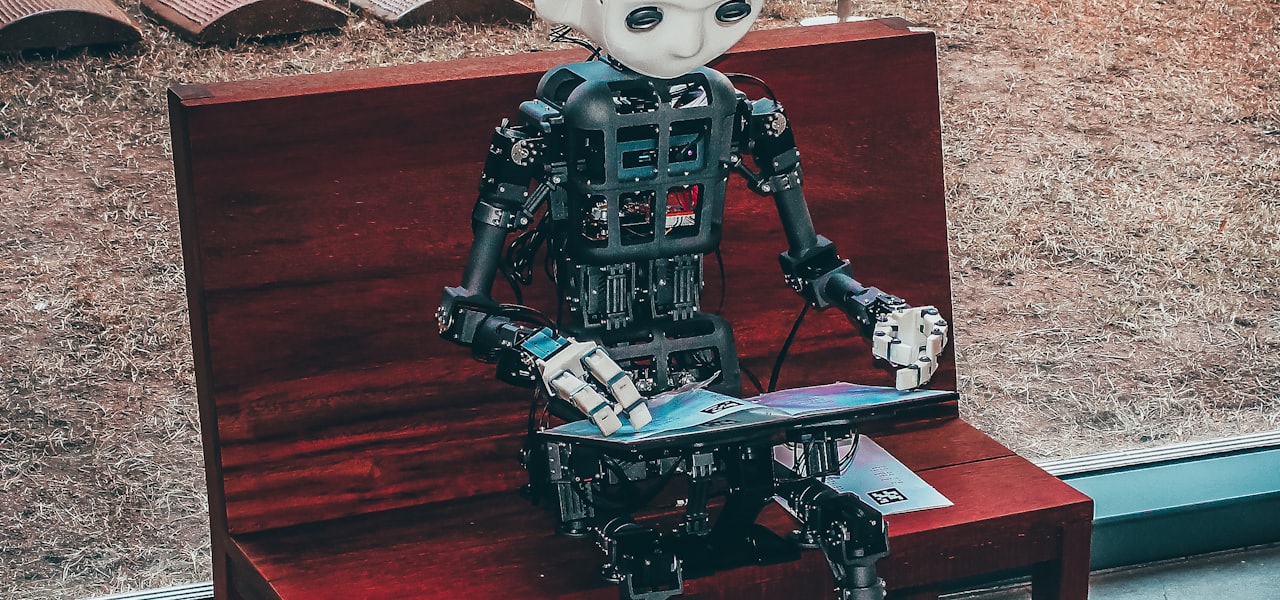
    The Santa Fe Trail problem is a genetic programming exercise in which artificial ants search for food pellets according to a programmed set of instructions. The layout of food pellets in the Santa Fe Trail problem has become a standard for comparing different genetic programming algorithms and solutions. One method for programming and testing algorithms on the Santa Fe Trail problem is by using the NetLogo application. There is at least one case of a student creating a Lego robotic ant to solve the problem.

    Read more →
  • Automation in construction

    Automation in construction

    Automation in construction is the combination of methods, processes, and systems that allow for greater machine autonomy in construction activities. Construction automation may have multiple goals, including but not limited to, reducing jobsite injuries, decreasing activity completion times, and assisting with quality control and quality assurance. Some systems may be fielded as a direct response to increasing skilled labor shortages in some countries. Opponents claim that increased automation may lead to less construction jobs and that software leaves heavy equipment vulnerable to hackers. Research insights on this subject are today published in several journals such as Automation in Construction by Elsevier. == Uses of automation in construction == Equipment control and management: Automation can be used to control and monitor construction equipment, such as cranes, excavators, and bulldozers. Material handling: Automated systems can be used to handle, transport, and place materials such as concrete, bricks, and stones. Surveying: Automated survey equipment and drones can be used to collect and analyze data on construction sites. Quality control: Automated systems can be used to monitor and control the quality of materials and construction processes. Safety management: Automated systems can be used to monitor and control safety conditions on construction sites. Scheduling and planning: Automated systems can be used to manage schedules, resources, and costs. Waste management: Automated systems can be used to manage and dispose of waste materials generated during construction. 3D printing: Automated 3D printing can be used to create prototypes, models, and even full-scale building components. == Autonomous heavy equipment == Advances in sensors, machine learning, and autonomous vehicle technology have led to the development of self-operating construction equipment and retrofit systems designed to automate excavators, bulldozers, tracked loaders, skid steer loaders, and haul trucks, allowing them to perform tasks with limited human supervision. Since 2017, tech companies have developed autonomous or semi-autonomous retrofit kits that can be installed on existing construction machinery. Examples include Bedrock Robotics, Built Robotics, and SafeAI, which develop sensor and software systems that enable excavators and other earthmoving machines to operate with varying degrees of autonomy. Major equipment manufacturers have also introduced autonomous capabilities: Caterpillar and John Deere have developed autonomous or semi-autonomous systems for construction and mining equipment, including haul trucks and earthmoving machines. == Transportation сonstruction == Kratos Defense & Security Solutions fielded the world’s first Autonomous Truck-Mounted Attenuator (ATMA) in 2017, in conjunction with Royal Truck & Equipment. == Benefits of automation in construction == The use of automation in construction has become increasingly prevalent in recent years due to its numerous benefits. Automation in construction refers to the use of machinery, software, and other technologies to perform tasks that were previously done manually by workers. One of the most significant benefits of automation in construction is increased productivity. Automation can help speed up construction processes, reduce project completion times, and improve overall efficiency. For example, using automated machinery for tasks such as concrete pouring, bricklaying, and welding can significantly increase the speed and accuracy of these tasks, allowing for more work to be completed in a shorter amount of time. Another benefit of automation in construction is improved safety. By automating tasks that are hazardous to workers, such as demolition or working at height, companies can reduce the risk of accidents and injuries on site. Automation can also help to reduce worker fatigue, which can be a significant factor in accidents and mistakes. Overall, the use of automation in construction can improve productivity, reduce costs, increase safety, and improve the quality of construction projects. As technology continues to advance, the use of automation is likely to become even more prevalent in the construction industry.

    Read more →
  • Relationship square

    Relationship square

    In statistics, the relationship square is a graphical representation for use in the factorial analysis of a table individuals x variables. This representation completes classical representations provided by principal component analysis (PCA) or multiple correspondence analysis (MCA), namely those of individuals, of quantitative variables (correlation circle) and of the categories of qualitative variables (at the centroid of the individuals who possess them). It is especially important in factor analysis of mixed data (FAMD) and in multiple factor analysis (MFA). == Definition of relationship square in the MCA frame == The first interest of the relationship square is to represent the variables themselves, not their categories, which is all the more valuable as there are many variables. For this, we calculate for each qualitative variable j {\displaystyle j} and each factor F s {\displaystyle F_{s}} ( F s {\displaystyle F_{s}} , rank s {\displaystyle s} factor, is the vector of coordinates of the individuals along the axis of rank s {\displaystyle s} ; in PCA, F s {\displaystyle F_{s}} is called principal component of rank s {\displaystyle s} ), the square of the correlation ratio between the F s {\displaystyle F_{s}} and the variable j {\displaystyle j} , usually denoted : η 2 ( j , F s ) {\displaystyle \eta ^{2}(j,F_{s})} Thus, to each factorial plane, we can associate a representation of qualitative variables themselves. Their coordinates being between 0 and 1, the variables appear in the square having as vertices the points (0,0), ( 0,1), (1,0) and (1,1). == Example in MCA == Six individuals ( i 1 , … , i 6 ) {\displaystyle i_{1},\ldots ,i_{6})} are described by three variables ( q 1 , q 2 , q 3 ) {\displaystyle (q_{1},q_{2},q_{3})} having respectively 3, 2 and 3 categories. Example : the individual i 1 {\displaystyle i_{1}} possesses the category a {\displaystyle a} of q 1 {\displaystyle q_{1}} , d {\displaystyle d} of q 2 {\displaystyle q_{2}} and f {\displaystyle f} of q 3 {\displaystyle q_{3}} . Applied to these data, the MCA function included in the R Package FactoMineR provides to the classical graph in Figure 1. The relationship square (Figure 2) makes easier the reading of the classic factorial plane. It indicates that: The first factor is related to the three variables but especially q 3 {\displaystyle q_{3}} (which have a very high coordinate along the first axis) and then q 2 {\displaystyle q_{2}} . The second factor is related only to q 1 {\displaystyle q_{1}} and q 3 {\displaystyle q_{3}} (and not to q 2 {\displaystyle q_{2}} which has a coordinate along axis 2 equal to 0) and that in a strong and equal manner. All this is visible on the classic graphic but not so clearly. The role of the relationship square is first to assist in reading a conventional graphic. This is precious when the variables are numerous and possess numerous coordinates. == Extensions == This representation may be supplemented with those of quantitative variables, the coordinates of the latter being the square of correlation coefficients (and not of correlation ratios). Thus, the second advantage of the relationship square lies in the ability to represent simultaneously quantitative and qualitative variables. The relationship square can be constructed from any factorial analysis of a table individuals x variables. In particular, it is (or should be) used systematically: in multiple correspondences analysis (MCA); in principal components analysis (PCA) when there are many supplementary variables; in factor analysis of mixed data (FAMD). An extension of this graphic to groups of variables (how to represent a group of variables by a single point ?) is used in Multiple Factor Analysis (MFA) == History == The idea of representing the qualitative variables themselves by a point (and not the categories) is due to Brigitte Escofier. The graphic as it is used now has been introduced by Brigitte Escofier and Jérôme Pagès in the framework of multiple factor analysis == Conclusion == In MCA, the relationship square provides a synthetic view of the connections between mixed variables, all the more valuable as there are many variables having many categories. This representation iscan be useful in any factorial analysis when there are numerous mixed variables, active and/or supplementary.

    Read more →
  • Latent space

    Latent space

    A latent space, also known as a latent feature space or embedding space, is an embedding of a set of items within a manifold in which items resembling each other are positioned closer to one another. Position within the latent space can be viewed as being defined by a set of latent variables that emerge from the resemblances between the objects. In most cases, the dimensionality of the latent space is chosen to be lower than the dimensionality of the feature space from which the data points are drawn, making the construction of a latent space an example of dimensionality reduction, which can also be viewed as a form of data compression. Latent spaces are usually fit via machine learning, and they can then be used as feature spaces in machine learning models, including classifiers and other supervised predictors. The interpretation of latent spaces in machine learning models is an ongoing area of research, but achieving clear interpretations remains challenging. The black-box nature of these models often makes the latent space unintuitive, while its high-dimensional, complex, and nonlinear characteristics further complicate the task of understanding it. Analysis of the latent space geometry of diffusion models reveals a fractal structure of phase transitions in the latent space, characterized by abrupt changes in the Fisher information metric. Some visualization techniques have been developed to connect the latent space to the visual world, but there is often not a direct connection between the latent space interpretation and the model itself. Such techniques include t-distributed stochastic neighbor embedding (t-SNE), where the latent space is mapped to two dimensions for visualization. Latent space distances lack physical units, so the interpretation of these distances may depend on the application. == Embedding models == Several embedding models have been developed to perform this transformation to create latent space embeddings given a set of data items and a similarity function. These models learn the embeddings by leveraging statistical techniques and machine learning algorithms. Here are some commonly used embedding models: Word2Vec: Word2Vec is a popular embedding model used in natural language processing (NLP). It learns word embeddings by training a neural network on a large corpus of text. Word2Vec captures semantic and syntactic relationships between words, allowing for meaningful computations like word analogies. GloVe: GloVe (Global Vectors for Word Representation) is another widely used embedding model for NLP. It combines global statistical information from a corpus with local context information to learn word embeddings. GloVe embeddings are known for capturing both semantic and relational similarities between words. Siamese Networks: Siamese networks are a type of neural network architecture commonly used for similarity-based embedding. They consist of two identical subnetworks that process two input samples and produce their respective embeddings. Siamese networks are often used for tasks like image similarity, recommendation systems, and face recognition. Variational Autoencoders (VAEs): VAEs are generative models that simultaneously learn to encode and decode data. The latent space in VAEs acts as an embedding space. By training VAEs on high-dimensional data, such as images or audio, the model learns to encode the data into a compact latent representation. VAEs are known for their ability to generate new data samples from the learned latent space. == Multimodality == Multimodality refers to the integration and analysis of multiple modes or types of data within a single model or framework. Embedding multimodal data involves capturing relationships and interactions between different data types, such as images, text, audio, and structured data. Multimodal embedding models aim to learn joint representations that fuse information from multiple modalities, allowing for cross-modal analysis and tasks. These models enable applications like image captioning, visual question answering, and multimodal sentiment analysis. To embed multimodal data, specialized architectures such as deep multimodal networks or multimodal transformers are employed. These architectures combine different types of neural network modules to process and integrate information from various modalities. The resulting embeddings capture the complex relationships between different data types, facilitating multimodal analysis and understanding. == Applications == Embedding latent space and multimodal embedding models have found numerous applications across various domains: Information retrieval: Embedding techniques enable efficient similarity search and recommendation systems by representing data points in a compact space. Natural language processing: Word embeddings have revolutionized NLP tasks like sentiment analysis, machine translation, and document classification. Computer vision: Image and video embeddings enable tasks like object recognition, image retrieval, and video summarization. Recommendation systems: Embeddings help capture user preferences and item characteristics, enabling personalized recommendations. Healthcare: Embedding techniques have been applied to electronic health records, medical imaging, and genomic data for disease prediction, diagnosis, and treatment. Social systems: Embedding techniques can be used to learn latent representations of social systems such as internal migration systems, academic citation networks, and world trade networks.

    Read more →
  • Scale-invariant feature operator

    Scale-invariant feature operator

    In the fields of computer vision and image analysis, the scale-invariant feature operator (or SFOP) is an algorithm to detect local features in images. The algorithm was published by Förstner et al. in 2009. == Algorithm == The scale-invariant feature operator (SFOP) is based on two theoretical concepts: spiral model feature operator Desired properties of keypoint detectors: Invariance and repeatability for object recognition Accuracy to support camera calibration Interpretability: Especially corners and circles, should be part of the detected keypoints (see figure). As few control parameters as possible with clear semantics Complementarity to known detectors scale-invariant corner/circle detector. == Theory == === Maximize the weight === Maximize the weight w {\displaystyle w} = 1/variance of a point p {\displaystyle p} w ( p , α , τ , σ ) = ( N ( σ ) − 2 ) λ m i n ( M ( p , α , τ , σ ) ) Ω ( p , α , τ , σ ) {\displaystyle w(\mathbf {p} ,\alpha ,\tau ,\sigma )=\left(N(\sigma )-2\right){\frac {\lambda _{min}(M(\mathbf {p} ,\alpha ,\tau ,\sigma ))}{\Omega (\mathbf {p} ,\alpha ,\tau ,\sigma )}}} comprising: 1. the image model Ω ( p , α , τ , σ ) = ∑ n = 1 N ( σ ) [ ( q n − p ) T R α ∇ T g ( q n ) ] 2 G σ ( q n − p ) = N ( σ ) t r { R α ∇ τ ∇ τ T R α T ∗ p p T G σ ( p ) } {\displaystyle {\begin{aligned}\Omega (\mathbf {p} ,\alpha ,\tau ,\sigma )&=\sum _{n=1}^{N(\sigma )}[(\mathbf {q} _{n}-\mathbf {p} )^{T}\mathbf {R} _{\alpha }\mathbf {\nabla } _{T}g(\mathbf {q} _{n})]^{2}G_{\sigma }(\mathbf {q} _{n}-\mathbf {p} )\\&=N(\sigma )\mathbf {tr} \left\{R_{\alpha }\mathbf {\nabla } _{\tau }\mathbf {\nabla } _{\tau }^{T}R_{\alpha }^{T}\mathbf {p} \mathbf {p} ^{T}G_{\sigma }(\mathbf {p} )\right\}\end{aligned}}} 2. the smaller eigenvalue of the structure tensor M ( p , α , τ , σ ) ⏟ structure tensor = G σ ( p ) ⏟ weighted summation ∗ ( R σ ∇ τ ∇ τ T R σ T ) ⏟ squared rotated gradients {\displaystyle \underbrace {M(\mathbf {p} ,\alpha ,\tau ,\sigma )} _{\text{structure tensor}}=\underbrace {G_{\sigma }(\mathbf {p} )} _{\text{weighted summation}}\underbrace {(R_{\sigma }\nabla _{\tau }\nabla _{\tau }^{T}R_{\sigma }^{T})} _{\text{squared rotated gradients}}} === Reduce the search space === Reduce the 5-dimensional search space by linking the differentiation scale τ {\displaystyle \tau } to the integration scale τ = σ / 3 {\displaystyle \tau =\sigma /3} solving for the optimal α ^ {\displaystyle {\hat {\alpha }}} using the model Ω ( α ) = a − b cos ⁡ ( 2 α − 2 α 0 ) {\displaystyle \Omega (\alpha )=a-b\cos(2\alpha -2\alpha _{0})} and determining the parameters from three angles, e. g. Ω ( 0 ∘ ) , Ω ( 60 ∘ ) , Ω ( 120 ∘ ) → a , b , α 0 → α ^ {\displaystyle \Omega (0^{\circ }),\Omega (60^{\circ }),\Omega (120^{\circ })\quad \rightarrow \quad a,b,\alpha _{0}\quad \rightarrow \quad {\hat {\alpha }}} pre-selection possible: α = 0 ∘ → junctions , α = 90 ∘ → circular features {\displaystyle \alpha =0^{\circ }\,\rightarrow \,{\mbox{junctions}},\quad \alpha =90^{\circ }\,\rightarrow \,{\mbox{circular features}}} === Filter potential keypoints === non-maxima suppression over scale, space and angle thresholding the isotropy λ 2 ( M ) {\displaystyle \lambda _{2(M)}} :eigenvalues characterize the shape of the keypoint, smallest eigenvalue has to be larger than threshold T λ {\displaystyle T_{\lambda }} derived from noise variance V ( n ) {\displaystyle V(n)} and significance level S {\displaystyle S} : T λ ( V ( n ) , τ , σ , S ) = N ( σ ) 16 π τ 4 V ( n ) χ 2 , S 2 {\displaystyle T_{\lambda }(V(n),\tau ,\sigma ,S)={\frac {N(\sigma )}{16\pi \tau ^{4}}}V(n)\chi _{2,S}^{2}} == Algorithm == == Results == === Interpretability of SFOP keypoints ===

    Read more →
  • Dataset shift

    Dataset shift

    Dataset shift is a phenomenon in machine learning and statistics in which the joint distribution of input variables and target labels is different in the training phase and the deployment or test phase (i.e., P t r a i n ( X , Y ) ≠ P t e s t ( X , Y ) {\displaystyle P_{train}(X,Y)\neq P_{test}(X,Y)} ). This happens when the statistical properties of data used to train a model are no longer representative of the data encountered in real-world use, often resulting in degraded predictive performance and diminished generalization ability. Dataset shift is a generic term for a number of particular types of distributional change. Covariate shift is when the distribution of the input features changes, but the conditional relationship between inputs and outputs remains constant . Prior probability shift (or label shift) happens when the distribution of target labels changes, but the conditional distribution of inputs given labels stays the same. Concept shift (also known as concept drift) is the change of the conditional relationship between inputs and outputs that renders previously learned patterns invalid over time. A key challenge for deploying machine learning systems is dataset shift, in particular in dynamic environments where the data distributions change over time. Detecting and mitigating such shifts is an active area of research, e.g., drift detection, domain adaptation, continual learning.

    Read more →
  • Probably approximately correct learning

    Probably approximately correct learning

    In computational learning theory, probably approximately correct (PAC) learning is a framework for mathematical analysis of machine learning. It was proposed in 1984 by Leslie Valiant. In this framework, the learner receives samples and must select a generalization function (called the hypothesis) from a certain class of possible functions. The goal is that, with high probability (the "probably" part), the selected function will have low generalization error (the "approximately correct" part). The learner must be able to learn the concept given any arbitrary approximation ratio, probability of success, or distribution of the samples. The model was later extended to treat noise (misclassified samples). An important innovation of the PAC framework is the introduction of computational complexity theory concepts to machine learning. In particular, the learner is expected to find efficient functions (time and space requirements bounded to a polynomial of the example size), and the learner itself must implement an efficient procedure (requiring an example count bounded to a polynomial of the concept size, modified by the approximation and likelihood bounds). == Definitions and terminology == In order to give the definition for something that is PAC-learnable, we first have to introduce some terminology. For the following definitions, two examples will be used. The first is the problem of character recognition given an array of n {\displaystyle n} bits encoding a binary-valued image. The other example is the problem of finding an interval that will correctly classify points within the interval as positive and the points outside of the range as negative. Let X {\displaystyle X} be a set called the instance space or the encoding of all the samples. In the character recognition problem, the instance space is X = { 0 , 1 } n {\displaystyle X=\{0,1\}^{n}} . In the interval problem the instance space, X {\displaystyle X} , is the set of all bounded intervals in R {\displaystyle \mathbb {R} } , where R {\displaystyle \mathbb {R} } denotes the set of all real numbers. A concept is a subset c ⊂ X {\displaystyle c\subset X} . One concept is the set of all patterns of bits in X = { 0 , 1 } n {\displaystyle X=\{0,1\}^{n}} that encode a picture of the letter "P". An example concept from the second example is the set of open intervals, { ( a , b ) ∣ 0 ≤ a ≤ π / 2 , π ≤ b ≤ 13 } {\displaystyle \{(a,b)\mid 0\leq a\leq \pi /2,\pi \leq b\leq {\sqrt {13}}\}} , each of which contains only the positive points. A concept class C {\displaystyle C} is a collection of concepts over X {\displaystyle X} . This could be the set of all subsets of the array of bits that are skeletonized 4-connected (width of the font is 1). Let EX ⁡ ( c , D ) {\displaystyle \operatorname {EX} (c,D)} be a procedure that draws an example, x {\displaystyle x} , using a probability distribution D {\displaystyle D} and gives the correct label c ( x ) {\displaystyle c(x)} , that is 1 if x ∈ c {\displaystyle x\in c} and 0 otherwise. Now, given 0 < ϵ , δ < 1 {\displaystyle 0<\epsilon ,\delta <1} , assume there is an algorithm A {\displaystyle A} and a polynomial p {\displaystyle p} in 1 / ϵ , 1 / δ {\displaystyle 1/\epsilon ,1/\delta } (and other relevant parameters of the class C {\displaystyle C} ) such that, given a sample of size p {\displaystyle p} drawn according to EX ⁡ ( c , D ) {\displaystyle \operatorname {EX} (c,D)} , then, with probability of at least 1 − δ {\displaystyle 1-\delta } , A {\displaystyle A} outputs a hypothesis h ∈ C {\displaystyle h\in C} that has an average error less than or equal to ϵ {\displaystyle \epsilon } on X {\displaystyle X} with the same distribution D {\displaystyle D} . Further if the above statement for algorithm A {\displaystyle A} is true for every concept c ∈ C {\displaystyle c\in C} and for every distribution D {\displaystyle D} over X {\displaystyle X} , and for all 0 < ϵ , δ < 1 {\displaystyle 0<\epsilon ,\delta <1} then C {\displaystyle C} is (efficiently) PAC learnable (or distribution-free PAC learnable). We can also say that A {\displaystyle A} is a PAC learning algorithm for C {\displaystyle C} . == Equivalence == Under some regularity conditions these conditions are equivalent: The concept class C is PAC learnable. The VC dimension of C is finite. C is a uniformly Glivenko-Cantelli class. C is compressible in the sense of Littlestone and Warmuth

    Read more →
  • Structured kNN

    Structured kNN

    Structured k-nearest neighbours (SkNN) is a machine learning algorithm that generalizes k-nearest neighbors (k-NN). k-NN supports binary classification, multiclass classification, and regression, whereas SkNN allows training of a classifier for general structured output. For instance, a data sample might be a natural language sentence, and the output could be an annotated parse tree. Training a classifier consists of showing many instances of ground truth sample-output pairs. After training, the SkNN model is able to predict the corresponding output for new, unseen sample instances; that is, given a natural language sentence, the classifier can produce the most likely parse tree. == Training == As a training set, SkNN accepts sequences of elements with class labels. The type of element does not matter; the only requirement is a defined metric function that gives a distance between each pair of elements of a set. SkNN is based on idea of creating a graph, with each node representing a class label. There is an edge between a pair of nodes if there is a sequence of two elements in the training set with corresponding classes. The first step of SkNN training is the construction of such a graph from training sequences. There are two special nodes in the graph corresponding to sentence beginnings and ends: if a sequence starts with class C, the edge between node START and node C should be created. Like regular k-NN, the second part of SkNN training consists of storing the elements of a training sequence in a certain way. Each element of the training sequences is stored in the node related to the class of the previous element in the sequence. Every first element is stored in the START node. == Inference == Labelling input sequences by SkNN consists of finding the sequence of transitions in the graph, starting from node START. Each transition corresponds to a single element of the input sequence. As a result, the label of each element is determined as the target node label of the transition. The cost of the path is defined as the sum of all transitions, with the cost of transition from node A to node B being the distance from the current input sequence element to the nearest element of class B, stored in node A. Determining an optimal path may be performed using a modified Viterbi algorithm (where the sum of the distances is minimized, unlike the original algorithm which maximizes the product of probabilities).

    Read more →
  • Ilastik

    Ilastik

    ilastik is free open source software for image classification and segmentation. No previous experience in image processing is required to run the software. Since 2018 ilastik is further developed and maintained by Anna Kreshuk's group at European Molecular Biology Laboratory. == Features == ilastik allows user to annotate an arbitrary number of classes in images with a mouse interface. Using these user annotations and the generic (nonlinear) image features, the user can train a random forest classifier. Trained ilastik classifiers can be applied new data not included in the training set in ilastik via its batch processing functionality, or without using the graphical user interface, in headless mode. ilastik can be integrated into various related tools: Pre-trained workflows can be executed directly from ImageJ/Fiji using the ilastik-ImageJ plugin. Pre-trained ilastik Pixel Classification workflows can be run directly in Python with the ilastik Python package, which is available via conda. ilastik has a CellProfiler module to use ilastik classifiers to process images within a CellProfiler framework. == History == ilastik was first released in 2011 by scientists at the Heidelberg Collaboratory for Image Processing (HCI), University of Heidelberg. == Application == The Interactive Learning and Segmentation Toolkit Carving Cell classification and neuron classification Synapse detection Cell tracking Neural Network Classification == Resources == ilastik project is hosted on GitHub. It is a collaborative project, any contributions such as comments, bug reports, bug fixes or code contributions are welcome. The ilastik team can be contacted for user support on the image.sc forum.

    Read more →
  • AI Overviews

    AI Overviews

    AI Overviews is an artificial intelligence (AI) feature integrated into Google Search that produces AI-generated summaries of search results. The feature has been criticized for its inaccuracy and for reducing website traffic. == History and development == AI Overviews were first introduced as part of Google's Search Generative Experience (SGE), which was unveiled at the Google I/O conference in May 2023. In May 2024 at Google I/O 2024, the feature was rebranded as AI Overviews and launched in the United States. The introduction of AI Overviews was seen as a strategic move to compete with other generative AI advancements, including OpenAI's ChatGPT. By August 2024, AI Overviews was rolled out to several other countries, including the United Kingdom, India, Japan, Brazil, Mexico, and Indonesia, with support for multiple languages. In October 2024, Google expanded the feature globally, making it available in over 100 countries. In December 2024, Botify x Demandsphere released findings stating that when AI Overviews and featured snippets appear together on the search engine results page, they take up approximately 67.1% of the screen on desktop and 75.7% on mobile. Even if content is ranking in the #1 position, it may not be visible to consumers if other visual elements on the results page are more prominent. In March 2025, Google started testing an "AI Mode", where the search results page is AI-generated. The company was also considering adding advertisements to the AI Mode, as they already exist in AI Overviews. As of May 2025, AI Overviews are available in over 200 countries and territories and in more than 40 languages. As of March 2026, Google AI Overviews appear on more than 48% of total Google Search queries, compared to just 6.49% in the previous year (58% year-over-year growth). == Functionality == The AI Overviews feature uses large language models to generate summaries from web content. The overviews are designed to be concise, providing a snapshot of relevant information about the queried topic. Google allows users to adjust the language complexity in summaries, offering both simplified and detailed options. The overviews also include links to sources. According to a June 2025 study by Semrush, the most cited source is Quora, followed by Reddit. == Reception == The feature has faced criticism for inaccuracies, including instances where erroneous or nonsensical content was generated. Depending on what is searched for, the overview may also consist of hallucinated content, such as when searching for idioms that do not exist. In May 2024, Google temporarily restricted the AI tool after it provided suggestions that were seen as nonsensical and harmful, such as telling users to eat rocks or apply glue on pizza. Concerns were also raised by content publishers, who feared a decline in web traffic as users relied on the summaries instead of visiting source websites. A Google patent from 2026 raised the concern of webmasters that Google could entirely replace the landing page of websites by an AI optimized copy of the website in its results. There is also apprehension about the ethical implications of AI-driven content aggregation, including its impact on intellectual property rights and the visibility of smaller content providers. The European Commission announced in December 2025 that they were investigating whether AI Overviews breached European competition law. In response, Google has stated its commitment to improve content validation and refine the algorithms used to filter unreliable information. Google implemented measures to prioritize link placement within AI Overviews, aiming to balance user convenience with the needs of content creators. In January 2026, Google restricted AI Overviews on certain health-related searches following an investigation by The Guardian. == Lawsuits == On February 24, 2025, Chegg sued Alphabet over the AI Overviews feature, claiming that it was leading to students preferring "low-quality, unverified AI summaries", thus violating antitrust law. Chegg also said it was considering either a sale or a take-private transaction. In September 2025, Penske Media Corporation, the publisher of Rolling Stone and The Hollywood Reporter, sued Google, claiming that AI Overviews illegally regurgitate content from their websites and drive off potential site visitors by always appearing on top of the search results while leaving little incentive to see the linked sources. The company stated that "the future of digital media and [...] its integrity [...] is threatened by Google's current actions", alleging that 20% of searches that link to Penske-owned websites show AI Overviews and that the figure is expected to rise. Google spokesperson José Castañeda called the claims "meritless" and stated that "AI Overviews send traffic to a greater diversity of sites." In 2026, Canadian musician Ashley MacIsaac filed a lawsuit against Google claiming that the AI Overview feature had wrongly stated that MacIsaac had been convicted of numerous criminal offences and was on the sex offender registry. He claims this incorrect information led to the cancellation of a December 2025 gig organized by the Sipekne'katik First Nation.

    Read more →
  • Random neural network

    Random neural network

    The Random Neural Network (RNN) is a mathematical representation of an interconnected network of neurons or cells which exchange spiking signals. It was invented by Erol Gelenbe and is linked to the G-network model of queueing networks which Erol Gelenbe also invented, and with his Gene Regulatory Network models. In this model, each neuronal cell state is represented by an integer whose value rises when the cell receives an excitatory spike and drops when it receives an inhibitory spike. The spikes can originate outside the network itself, or they can come from other cells in the networks. Cells whose internal excitatory state has a positive value are allowed to send out spikes of either kind to other cells in the network according to specific cell-dependent spiking rates. The model has a mathematical solution in steady-state which provides the joint probability distribution of the network in terms of the individual probabilities that each cell is excited and able to send out spikes. Computing this solution is based on solving a set of non-linear algebraic equations whose parameters are related to the spiking rates of individual cells and their connectivity to other cells, as well as the arrival rates of spikes from outside the network. The RNN is a recurrent model, i.e. a neural network that is allowed to have complex feedback loops. A highly energy-efficient implementation of random neural networks was demonstrated by Krishna Palem et al. using the Probabilistic CMOS or PCMOS technology and was shown to be c. 226–300 times more efficient in terms of Energy-Performance-Product. RNNs are also related to artificial neural networks, which (like the random neural network) have gradient-based learning algorithms. The learning algorithm for an n-node random neural network that includes feedback loops (it is also a recurrent neural network) is of computational complexity O(n^3) (the number of computations is proportional to the cube of n, the number of neurons). The random neural network can also be used with other learning algorithms such as reinforcement learning. The RNN has been shown to be a universal approximator for bounded and continuous functions.

    Read more →
  • Swish function

    Swish function

    The swish function is a family of mathematical function defined as follows: swish β ⁡ ( x ) = x sigmoid ⁡ ( β x ) = x 1 + e − β x . {\displaystyle \operatorname {swish} _{\beta }(x)=x\operatorname {sigmoid} (\beta x)={\frac {x}{1+e^{-\beta x}}}.} where β {\displaystyle \beta } can be constant (usually set to 1) or trainable and "sigmoid" refers to the logistic function. The swish family was designed to smoothly interpolate between a linear function and the Rectified linear unit (ReLU) function. When considering positive values, Swish is a particular case of doubly parameterized sigmoid shrinkage function defined in . Variants of the swish function include Mish. == Special values == For β = 0, the function is linear: f(x) = x/2. For β = 1, the function is the Sigmoid Linear Unit (SiLU). For β = 1.702, the function approximates GeLU. With β → ∞, the function converges to ReLU. Thus, the swish family smoothly interpolates between a linear function and the ReLU function. Since swish β ⁡ ( x ) = swish 1 ⁡ ( β x ) / β {\displaystyle \operatorname {swish} _{\beta }(x)=\operatorname {swish} _{1}(\beta x)/\beta } , all instances of swish have the same shape as the default swish 1 {\displaystyle \operatorname {swish} _{1}} , zoomed by β {\displaystyle \beta } . One usually sets β > 0 {\displaystyle \beta >0} . When β {\displaystyle \beta } is trainable, this constraint can be enforced by β = e b {\displaystyle \beta =e^{b}} , where b {\displaystyle b} is trainable. swish 1 ⁡ ( x ) = x 2 + x 2 4 − x 4 48 + x 6 480 + O ( x 8 ) {\displaystyle \operatorname {swish} _{1}(x)={\frac {x}{2}}+{\frac {x^{2}}{4}}-{\frac {x^{4}}{48}}+{\frac {x^{6}}{480}}+O\left(x^{8}\right)} swish 1 ⁡ ( x ) = x 2 tanh ⁡ ( x 2 ) + x 2 swish 1 ⁡ ( x ) + swish − 1 ⁡ ( x ) = x tanh ⁡ ( x 2 ) swish 1 ⁡ ( x ) − swish − 1 ⁡ ( x ) = x {\displaystyle {\begin{aligned}\operatorname {swish} _{1}(x)&={\frac {x}{2}}\tanh \left({\frac {x}{2}}\right)+{\frac {x}{2}}\\\operatorname {swish} _{1}(x)+\operatorname {swish} _{-1}(x)&=x\tanh \left({\frac {x}{2}}\right)\\\operatorname {swish} _{1}(x)-\operatorname {swish} _{-1}(x)&=x\end{aligned}}} == Derivatives == Because swish β ⁡ ( x ) = swish 1 ⁡ ( β x ) / β {\displaystyle \operatorname {swish} _{\beta }(x)=\operatorname {swish} _{1}(\beta x)/\beta } , it suffices to calculate its derivatives for the default case. swish 1 ′ ⁡ ( x ) = x + sinh ⁡ ( x ) 4 cosh 2 ⁡ ( x 2 ) + 1 2 {\displaystyle \operatorname {swish} _{1}'(x)={\frac {x+\sinh(x)}{4\cosh ^{2}\left({\frac {x}{2}}\right)}}+{\frac {1}{2}}} so swish 1 ′ ⁡ ( x ) − 1 2 {\displaystyle \operatorname {swish} _{1}'(x)-{\frac {1}{2}}} is odd. swish 1 ″ ⁡ ( x ) = 1 − x 2 tanh ⁡ ( x 2 ) 2 cosh 2 ⁡ ( x 2 ) {\displaystyle \operatorname {swish} _{1}''(x)={\frac {1-{\frac {x}{2}}\tanh \left({\frac {x}{2}}\right)}{2\cosh ^{2}\left({\frac {x}{2}}\right)}}} so swish 1 ″ ⁡ ( x ) {\displaystyle \operatorname {swish} _{1}''(x)} is even. == History == SiLU was first proposed alongside the GELU in 2016, then again proposed in 2017 as the Sigmoid-weighted Linear Unit (SiL) in reinforcement learning. The SiLU/SiL was then again proposed as the SWISH over a year after its initial discovery, originally proposed without the learnable parameter β, so that β implicitly equaled 1. The swish paper was then updated to propose the activation with the learnable parameter β. In 2017, after performing analysis on ImageNet data, researchers from Google indicated that using this function as an activation function in artificial neural networks improves the performance, compared to ReLU and sigmoid functions. It is believed that one reason for the improvement is that the swish function helps alleviate the vanishing gradient problem during backpropagation.

    Read more →